LIVE
OpenAIOpenAI Report Maps AI's Impact on European Jobs·OpenAIOpenAI Previews GPT-5.6 Sol: Next-Gen Coding and Safety·DeepMindDeepMind gives Gemini 3.5 Flash desktop control·Google AIGoogle Finance exits beta with new Android app·HuggingFaceRun vLLM on HuggingFace Jobs with One Command·HuggingFaceNVIDIA NeMo AutoModel Automates Fine-Tuning, Cuts Time by 40%·OpenAIOpenAI research: AI agents extend work beyond simple tasks·HuggingFaceHuggingFace launches CUGA: lightweight harness for agentic apps·OpenAIOmio Uses OpenAI to Build Conversational Travel Experiences·HuggingFacePP-OCRv6 Arrives on Hugging Face: 50 Languages, Tiny to Medium Models·OpenAISamsung equips 100,000+ employees with ChatGPT Enterprise·OpenAIOpenAI Rolls Out Spend Controls and Analytics for ChatGPT Enterprise·HuggingFaceMosaicLeaks Benchmark Exposes Research Agents' Inability to Keep Secrets·Google AIGoogle's AMIE Medical AI Matches Doctors in Disease Management·HuggingFaceMolmoMotion: Language-Guided 3D Motion Forecasting Hits HuggingFace·DeepMindDeepMind and UK government build AI prototype to speed housing decisions·HuggingFaceHugging Face lets you deploy robot policies from Hub to real hardware·OpenAIOpenAI's Deployment Simulation predicts model behavior before launch·Google AIGoogle invests $1.5B in Alabama data center expansion·OpenAIOpenAI launches Partner Network with $150M investment fund·OpenAIOpenAI Report Maps AI's Impact on European Jobs·OpenAIOpenAI Previews GPT-5.6 Sol: Next-Gen Coding and Safety·DeepMindDeepMind gives Gemini 3.5 Flash desktop control·Google AIGoogle Finance exits beta with new Android app·HuggingFaceRun vLLM on HuggingFace Jobs with One Command·HuggingFaceNVIDIA NeMo AutoModel Automates Fine-Tuning, Cuts Time by 40%·OpenAIOpenAI research: AI agents extend work beyond simple tasks·HuggingFaceHuggingFace launches CUGA: lightweight harness for agentic apps·OpenAIOmio Uses OpenAI to Build Conversational Travel Experiences·HuggingFacePP-OCRv6 Arrives on Hugging Face: 50 Languages, Tiny to Medium Models·OpenAISamsung equips 100,000+ employees with ChatGPT Enterprise·OpenAIOpenAI Rolls Out Spend Controls and Analytics for ChatGPT Enterprise·HuggingFaceMosaicLeaks Benchmark Exposes Research Agents' Inability to Keep Secrets·Google AIGoogle's AMIE Medical AI Matches Doctors in Disease Management·HuggingFaceMolmoMotion: Language-Guided 3D Motion Forecasting Hits HuggingFace·DeepMindDeepMind and UK government build AI prototype to speed housing decisions·HuggingFaceHugging Face lets you deploy robot policies from Hub to real hardware·OpenAIOpenAI's Deployment Simulation predicts model behavior before launch·Google AIGoogle invests $1.5B in Alabama data center expansion·OpenAIOpenAI launches Partner Network with $150M investment fund·
Back
OpenAI Builds Secure Sandbox to Bring Codex AI Coding to Windows
Product/OpenAI

OpenAI Builds Secure Sandbox to Bring Codex AI Coding to Windows

O

OpenAI

May 13, 2026

1 MIN

Original source

openai.com — read the full announcement →

Sandboxing Technology for AI Code Execution

OpenAI has developed a specialized sandbox environment that allows Codex, its AI coding assistant, to operate safely on Windows systems. The sandbox creates a controlled execution environment where AI-generated code can run without risking the host system's security or stability. This breakthrough enables Codex to function as a practical coding agent on one of the world's most widely-used operating systems.

Controlled Access and Security Measures

The sandbox implements strict file access controls and network restrictions to prevent unauthorized system modifications or data breaches. By limiting what the AI can read, write, and access, OpenAI ensures that Codex operates within safe boundaries while maintaining its ability to assist developers effectively. These security layers are critical for enterprise adoption where data protection is paramount.

Enabling Practical AI Coding Agents

This sandboxing solution represents a significant step toward deploying autonomous coding agents in production environments. Developers can now leverage Codex's capabilities on Windows with confidence that the AI won't inadvertently damage files or compromise system security. The technology paves the way for more widespread adoption of AI-assisted development tools across Windows-based workflows.
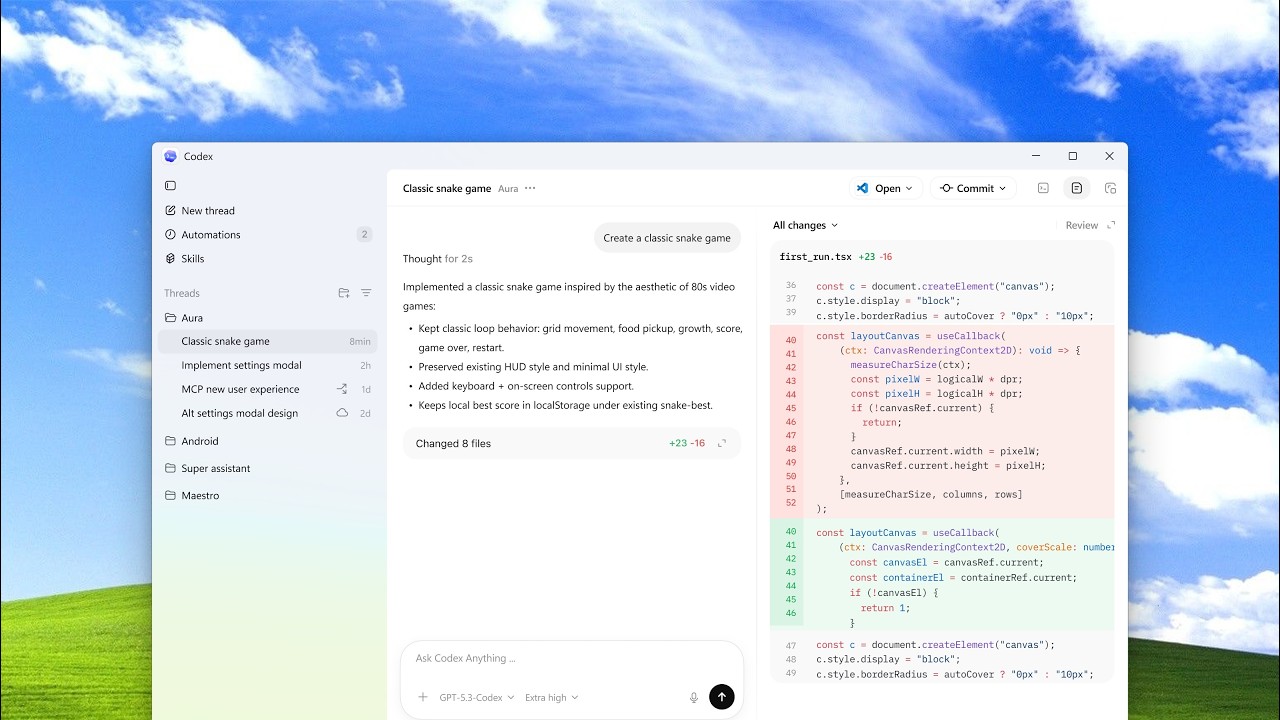
Watch video
Video thumbnail
Click to play

Frequently Asked Questions

What is a sandbox in the context of AI coding tools?

A sandbox is an isolated environment where AI-generated code can execute safely without affecting the main operating system. It restricts file access, network connections, and system modifications to prevent potential security risks or unintended damage.

Why was sandboxing necessary for Codex on Windows?

Sandboxing was essential to prevent Codex from accidentally modifying critical system files, accessing sensitive data, or making unauthorized network connections. Without these safeguards, AI-generated code could pose security risks in production environments.

Can developers use Codex on Windows now?

Yes, with the new sandbox implementation, developers can safely use Codex on Windows systems. The sandbox ensures that AI coding assistance operates within controlled boundaries while maintaining functionality for legitimate development tasks.

↑ SWIPE FOR NEXT