LIVE
HuggingFaceHuggingFace launches CUGA: lightweight harness for agentic apps·OpenAIOmio Uses OpenAI to Build Conversational Travel Experiences·HuggingFacePP-OCRv6 Arrives on Hugging Face: 50 Languages, Tiny to Medium Models·OpenAISamsung equips 100,000+ employees with ChatGPT Enterprise·OpenAIOpenAI Rolls Out Spend Controls and Analytics for ChatGPT Enterprise·HuggingFaceMosaicLeaks Benchmark Exposes Research Agents' Inability to Keep Secrets·Google AIGoogle's AMIE Medical AI Matches Doctors in Disease Management·HuggingFaceMolmoMotion: Language-Guided 3D Motion Forecasting Hits HuggingFace·DeepMindDeepMind and UK government build AI prototype to speed housing decisions·HuggingFaceHugging Face lets you deploy robot policies from Hub to real hardware·OpenAIOpenAI's Deployment Simulation predicts model behavior before launch·Google AIGoogle invests $1.5B in Alabama data center expansion·OpenAIOpenAI launches Partner Network with $150M investment fund·OpenAIOpenAI launches three Agent Academy courses for workplace AI skills·DeepMindDeepMind's DiffusionGemma speeds text generation 4x·Google AIGoogle pours community funds into Virginia jobs and energy·OpenAIPreply uses OpenAI to generate AI lesson summaries for tutors·HuggingFaceHuggingFace Details PyTorch Profiling for Fused MLP Layers·DeepMindGemini 3.5 Live Translate delivers fluid natural speech translation·HuggingFaceHuggingFace benchmarks code-switched ASR: OpenAI, Google, Meta fail hard·HuggingFaceHuggingFace launches CUGA: lightweight harness for agentic apps·OpenAIOmio Uses OpenAI to Build Conversational Travel Experiences·HuggingFacePP-OCRv6 Arrives on Hugging Face: 50 Languages, Tiny to Medium Models·OpenAISamsung equips 100,000+ employees with ChatGPT Enterprise·OpenAIOpenAI Rolls Out Spend Controls and Analytics for ChatGPT Enterprise·HuggingFaceMosaicLeaks Benchmark Exposes Research Agents' Inability to Keep Secrets·Google AIGoogle's AMIE Medical AI Matches Doctors in Disease Management·HuggingFaceMolmoMotion: Language-Guided 3D Motion Forecasting Hits HuggingFace·DeepMindDeepMind and UK government build AI prototype to speed housing decisions·HuggingFaceHugging Face lets you deploy robot policies from Hub to real hardware·OpenAIOpenAI's Deployment Simulation predicts model behavior before launch·Google AIGoogle invests $1.5B in Alabama data center expansion·OpenAIOpenAI launches Partner Network with $150M investment fund·OpenAIOpenAI launches three Agent Academy courses for workplace AI skills·DeepMindDeepMind's DiffusionGemma speeds text generation 4x·Google AIGoogle pours community funds into Virginia jobs and energy·OpenAIPreply uses OpenAI to generate AI lesson summaries for tutors·HuggingFaceHuggingFace Details PyTorch Profiling for Fused MLP Layers·DeepMindGemini 3.5 Live Translate delivers fluid natural speech translation·HuggingFaceHuggingFace benchmarks code-switched ASR: OpenAI, Google, Meta fail hard·
Back
OpenAI
Product/OpenAI

Preply uses OpenAI to generate AI lesson summaries for tutors

O

OpenAI

June 12, 2026

3 MIN

Original source

openai.com — read the full announcement →

Preply launches AI-generated lesson summaries with OpenAI

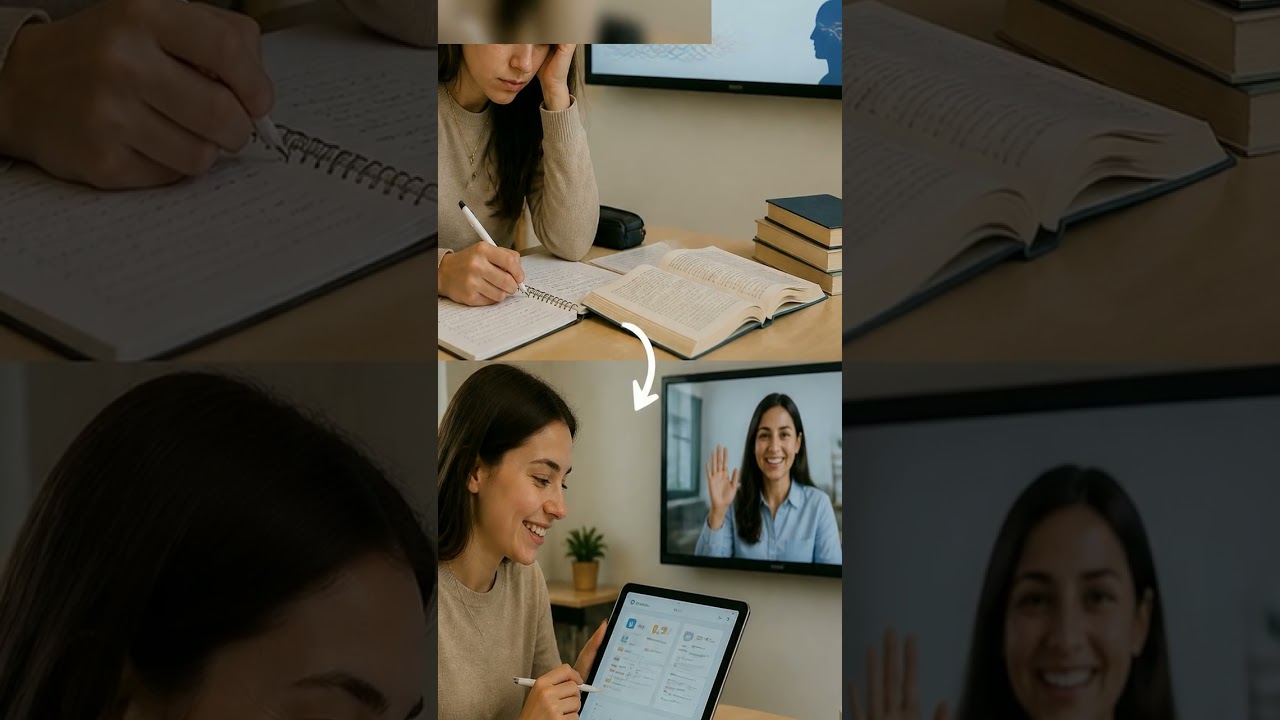
Preply, the language learning platform that connects students with human tutors, just announced it's integrating OpenAI's models to generate post-lesson summaries. These summaries include personalized feedback, vocabulary lists, and custom exercises based on what was covered in the session. The feature is rolling out now to all 40,000 tutors on the platform. Here's the key detail: the AI doesn't replace the tutor — it writes up what the tutor and student already did. The tutor reviews and approves each summary before it reaches the student. That human-in-the-loop design is deliberate. Preply says early testers saw a 30% increase in lesson completion rates when summaries were used.

Why Preply needed AI summaries now

Language learning platforms have been chasing personalization for years. Duolingo uses gamification. Babbel leans on structured courses. Preply's bet has always been that human tutors provide the best feedback — but that feedback is ephemeral. A student finishes a 50-minute session and walks away with nothing but memory. Tutors, meanwhile, spend hours writing manual summaries and homework assignments. That's not scalable. Preply's 40,000 tutors teach over a million lessons per month. The math is simple: if each tutor spends 10 minutes per lesson on admin, that's 200,000 hours of unpaid work monthly. OpenAI's models can cut that to near zero, freeing tutors to focus on teaching. The timing makes sense — generative AI has finally reached the reliability threshold where a tutor can trust the output with a quick review.

The real impact: tutor efficiency and student retention

The 30% bump in lesson completion rates is the headline number, but the deeper story is about tutor economics. Preply's tutors are independent contractors who set their own rates. Their biggest cost isn't software — it's time. If AI summaries save each tutor 5 minutes per lesson, that's an extra 83,000 hours of teaching capacity per month across the platform. For a tutor teaching 20 lessons a week, that's nearly two hours saved. They can either teach more students or take a break. Either way, Preply wins. The student side matters too. A well-written summary with vocabulary and exercises turns a one-off lesson into a study session. That's sticky. Students who get summaries are more likely to book again. The AI also adapts to each student's level — a beginner gets simpler exercises than an advanced learner.

What Preply isn't saying about AI limitations

Preply is careful to frame this as a tutor tool, not a replacement. But there are open questions. How does the AI handle accents, code-switching, or non-standard grammar? Language tutors deal with messy real-world speech — learners who mix languages, make unpredictable errors, or have specific cultural contexts. OpenAI's models are trained on clean text, not the chaos of a live conversation. Preply says tutors review every summary, but that review itself takes time. If the AI produces low-quality output, the tutor ends up rewriting it — which defeats the purpose. There's also the data question: Preply is sending lesson transcripts to OpenAI's servers. The company says it uses enterprise-grade privacy controls, but students and tutors may not love their conversations being processed by a third party. And finally, the 30% completion rate bump came from early testers — likely power users who already trusted the system. The real test is whether casual tutors and skeptical students see the same benefit.
Watch video
Video thumbnail
Click to play

Frequently Asked Questions

How does Preply's AI summary feature work?

After a lesson, OpenAI's models generate a summary including key vocabulary, grammar corrections, and personalized exercises. The tutor reviews and approves the summary before it's sent to the student. This keeps the human in control while automating the administrative work.

Does the AI replace human tutors on Preply?

No. The AI only handles post-lesson summaries and exercises. Tutors still teach live sessions, provide real-time feedback, and approve all AI-generated content. Preply's model is explicitly human-first — the AI is a productivity tool, not a replacement.

What data does Preply share with OpenAI?

Preply sends lesson transcripts and tutor-approved summaries to OpenAI's API for processing. The company says it uses enterprise-grade data protection and does not use the data to train OpenAI's models. Students and tutors can opt out of the feature.

How much time does the AI save tutors?

Preply estimates the AI saves tutors 5-10 minutes per lesson on administrative tasks like writing summaries and creating exercises. For a tutor teaching 20 lessons per week, that's up to 3 hours saved — time they can use to teach more or reduce burnout.

Is the AI summary feature available to all Preply users?

Yes, the feature is rolling out to all 40,000 tutors and their students. It's optional — tutors can choose to use it or continue writing summaries manually. Preply plans to expand the feature with more customization options based on tutor feedback.

↑ SWIPE FOR NEXT